Appendicitis is an inflammation (citis) of the appendix. According to The National Institute of Diabetes and Digestive and Kidney Disease (NIH), appendicitis most commonly occurs in the teens and twenties; however, it could occur at any age. In the United States, appendicitis is the most common cause of acute abdominal pain requiring surgery. It is said that over 5% of the population develops appendicitis at some point in their lives.


What is the function of the appendix?
Unfortunately, the function of the appendix is unknown. According to Mayo Clinic, the appendix doesn’t seem to have a specific purpose that researchers are aware of.
When the appendix inflames, in most people, pain begins around the umbilicus, (belly button), and then the pain moves to the lower right abdomen. As inflammation worsens, appendicitis pain typically increases and eventually becomes severe.
What are the symptoms of appendicitis?
According to Cleveland Clinic,
- Nausea.
- Vomiting.
- Pain when touched on the lower right side of the abdomen.
- Abdominal pain or tenderness, usually in the center of the abdomen above the belly button, then shifting to the lower right side of the abdomen. The pain increases when moving, taking deep breaths, coughing, or sneezing.
- Fever, usually low-grade (under 100 degrees).
- Inability to pass gas.
- Diarrhea.
- Constipation.
- Abdominal swelling.
- Lack of appetite.
Note : Not everyone will have all of the symptoms.
What causes appendicitis?
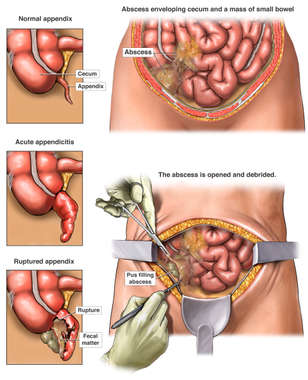
A blockage in the lining of the appendix that results in infection is the likely cause of appendicitis. The bacteria multiply rapidly, causing the appendix to become inflamed, swollen and filled with pus. If not treated promptly, the appendix can rupture.
Is it true that eating seeds can cause appendicitis?

There was an investigation done in Turkey. According to Engin, Yildirim, Yakan, & Coskun (2011), “among 1,969 cases diagnosed as acute appendicitis that underwent appendectomy between 2002 and 2009, 8 cases with presence of undigested plant residuals and fruit seeds were studied (0.4%, 8/1969)”. They stated in their journal that “most of the people who eat fruit seeds and plant residuals do not develop appendicitis generally. Ratio of acute appendicitis caused by plants is minimal in all appendectomised patients” (2011).
How will the doctor diagnose appendicitis?
Your doctor will take a history of your signs and symptoms and examine your abdomen by palpating the area to assess your pain. There are certain points on your abdomen where your doctor may apply a gentle pressure and certain movement the doctor may have you perform to do this.
McBurney’s sign:
Pain at the McBurney’s point (2/3 of the way from umbilicus to anterior superior iliac spine) under a gentle pressure indicates acute appendicitis.


Rovsing’s sign:
Pain at the Rovsing’s point (left lower abdomen) under a gentle pressure, suggests acute appendicitis. Pushing bowel contents in the left lower abdomen will increase pressure around the appendix.


Obturator sign:
Abdominal discomfort upon the internal rotation of the right leg with the leg flexed to 90 degrees at the hip and knee and a resultant tightening of the internal obturator muscle may be indicative of appendicitis.


Psoas sign:
The examiner places a hand just above a patient’s right knee and instructs the patient to push the right leg against the hand. An increase of abdominal pain by this movement may indicate appendicitis.


Other tests doctors may run
- Blood test to check for a high white blood cell account, which is an indicator of infection.

- Urine test to rule out a urinary infection or a kidney stone, which could also cause abdominal pain.

- Imaging tests, such as an abdominal X-ray, an abdominal ultrasound or a computerized tomography (CT) scan to help confirm appendicitis or find other causes for the pain.

Abdominal ultrasound 
Abdominal CT scan
How can appendicitis be treated?
According to the Clevelant Clinic, treating appendicitis with antibiotics is gaining popularity among doctors in Europe; however, the treatment has not yet been accepted as the routine standard of care in the United States. The Mayo Clinic says appendicitis treatment usually involves an appendectomy, a surgery to remove the inflamed appendix. Before surgery, you may be given a dose of antibiotics to prevent infection.
Appendectomy:
An appendectomy can be performed as open surgery using one abdominal incision about 2 to 4 inches (5 to 10 centimeters) long (laparotomy).

Laparoscopic appendectomy:
The surgery can also be performed through a few small abdominal incisions (laparoscopic surgery). In general, laparoscopic surgery allows you to recover faster and heal with less pain and scarring. It may be better for people who are elderly or obese.


If a treatment is delayed, appendicitis can cause a serious complication!!
- A ruptured appendix: A rupture spreads infection throughout your abdomen (peritonitis). It is a potentially life-threatening condition which requires immediate surgery to remove the appendix and clean the abdominal cavity.
How can we prevent appendicitis?
The Cleveland clinic says there is no way to prevent appendicitis. However, appendicitis is less common in people who eat foods high in fiber, such as fresh vegetables and fruits.

Posted by Michiyo Kasahara
References
Cleveland Clinic. (2016). Appendicitis. Retrieved from https://my.clevelandclinic.org/health/diseases/8095-appendicitis
Engin, O., Yildirim, M., Yakan, S., & Coskun, G. A. (2011). Can fruit seeds and undigested plant residuals cause acute appendicitis. Asian Pacific journal of tropical biomedicine, 1(2), 99–101. doi:10.1016/S2221-1691(11)60004-X
Mayo Clinic .(2018). Appendicitis. Retrieved from https://www.mayoclinic.org/diseases-conditions/appendicitis/symptoms-causes/syc-20369543
The National Institute of Diabetes and Digestive and Kidney Diseases. (2014). Definition and facts for appendicitis. Retrieved from https://www.niddk.nih.gov/health-information/digestive-diseases/appendicitis/definition-facts#ref1
 Gastrointestinal Diseases that affects your daily life